

Tankless Water Heater Installation & Repair in Santa Clarita, CA
Hot water turns cold mid-shower, temperature swings, error codes, ignition trouble, low flow, mineral scale, or a tankless unit that cannot keep up with demand? Alliance United Plumber Santa Clarita provides tankless water heater diagnostics, repair, replacement, installation, and maintenance for homes and businesses.
A tankless system works differently from a storage tank, so the diagnosis should account for flow rate, fuel or electrical supply, venting, water quality, scale buildup, sensors, controls, and the actual hot-water demand of the property.
For a suspected natural-gas leak or carbon-monoxide concern, leave the area and contact SoCalGas or emergency services from a safe location before arranging appliance repair.
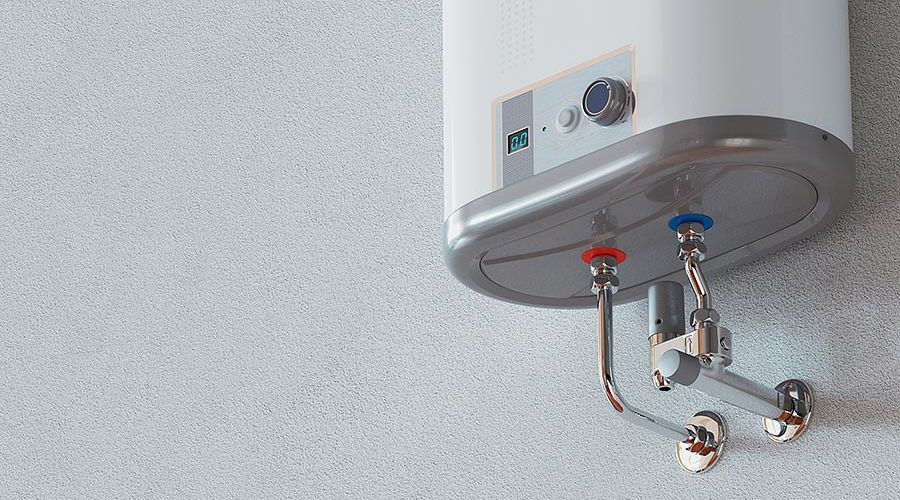
How Does a Tankless Water Heater Work?
The U.S. Department of Energy explains that demand-type water heaters avoid the standby energy losses associated with storing a full tank of hot water. DOE also notes that tankless output is limited by flow rate, which is why sizing matters when several fixtures may run at the same time. A unit that performs well for one shower may struggle when a second shower, dishwasher, or washing machine is added to the demand.
That is why “tankless water heater repair” should not begin with replacing random parts. The plumber should identify whether the complaint is caused by scale buildup, a restricted filter, ignition or flame-sensing problems, gas-supply limitations, venting, electrical power, sensor faults, plumbing crossover, low activation flow, or an undersized unit.
What Are the Signs a Tankless Water Heater Needs Repair?
Tankless systems often show inconsistent performance before they stop producing hot water entirely. Some symptoms point toward maintenance, while others indicate a component, fuel, venting, or sizing problem.
The error code can be useful, but it should be treated as a starting point rather than a complete diagnosis. Manufacturers use different controls and code systems, and one code can have several possible causes depending on the model and installation.
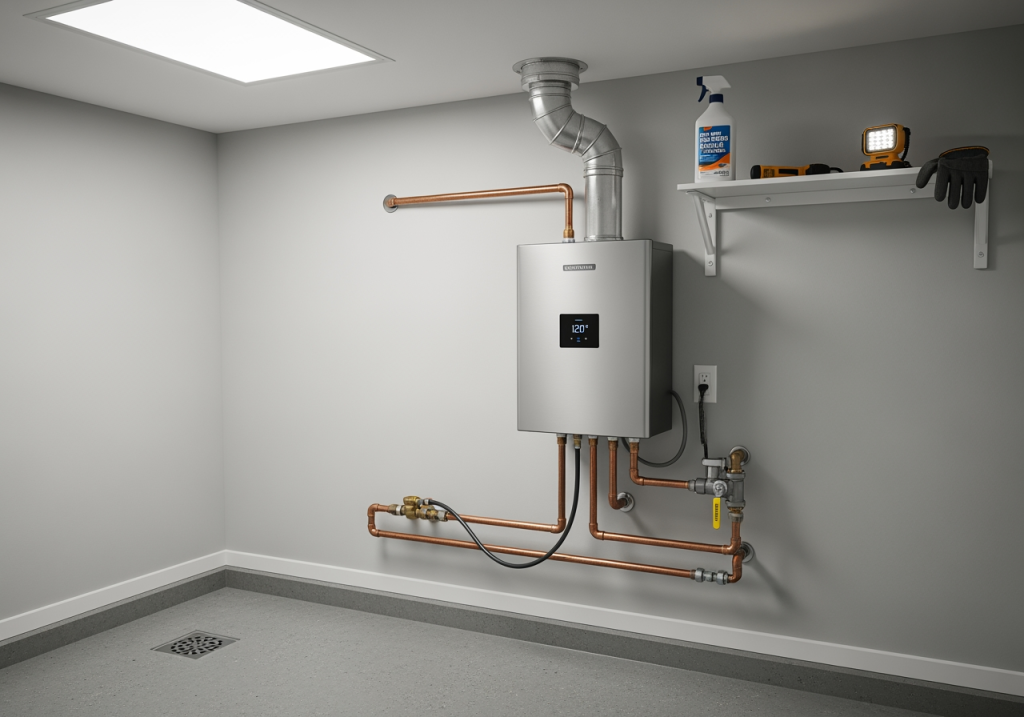
Should You Repair a Tankless Water Heater or Install a New One?
The best decision depends on the failed component, the condition of the heat exchanger, installation quality, maintenance history, capacity, and whether the unit still fits the property's hot-water demand.
Repair May Make Sense When
The unit is otherwise in good condition and the problem is a serviceable part, filter restriction, scale buildup, ignition component, sensor, control issue, valve, or maintenance-related condition. A repair also makes more sense when the unit is correctly sized and performs normally after the defect is corrected.
Replacement May Make Sense When
Failures are becoming frequent, the heat exchanger or another major component is compromised, the unit is badly undersized, the installation needs substantial correction, parts are difficult to obtain, or the property now has greater hot-water demand than the system was designed to handle.
A homeowner adding a bathroom, remodeling, converting space, building an ADU, or changing occupancy may have a different demand profile than when the original unit was installed. In those situations, a replacement decision should include sizing rather than simply installing the same capacity again.
Does Hard Water Affect Tankless Water Heaters?
SCV Water says many Santa Clarita Valley residents experience hard water caused by naturally occurring calcium and magnesium in the groundwater supply. The agency explains that hardness is not considered a drinking-water contaminant, but the minerals can leave deposits on hard surfaces.
That local water context matters for tankless systems because mineral deposits can accumulate in the small waterways of a heat exchanger and reduce heat-transfer performance or restrict flow over time. The amount of scale depends on the water, temperature, usage, maintenance history, and appliance design.
Descaling or flushing intervals should follow the manufacturer's instructions and the actual water conditions rather than a universal schedule. Properties with noticeable scale may need maintenance sooner than properties with softer water or water-treatment equipment.
How Do You Size a Tankless Water Heater Correctly?
Tankless systems are sized around flow rate and the temperature increase required to heat incoming water—not simply by copying the gallon capacity of an old tank.
DOE notes that tankless units have a maximum hot-water flow rate. That means simultaneous use is one of the most important questions. A shower, second shower, kitchen sink, dishwasher, washing machine, and other hot-water fixtures can overlap. The system has to deliver the combined flow at the desired temperature rise.
Gas-fired units often provide higher flow rates than electric models, but a larger gas unit can require adequate gas-line capacity, proper venting, combustion air where applicable, electrical power for controls, condensate management on applicable condensing models, and installation clearances. Electric tankless systems can require substantial electrical capacity depending on the size.
Flow Rate
How many gallons per minute of hot water the property may need when fixtures operate at the same time.
Temperature Rise
The difference between incoming cold-water temperature and the desired hot-water temperature affects how much flow the unit can support.
Utility Capacity
Gas line size, gas meter conditions, electrical service, venting, and other utility requirements can affect which model can be installed.
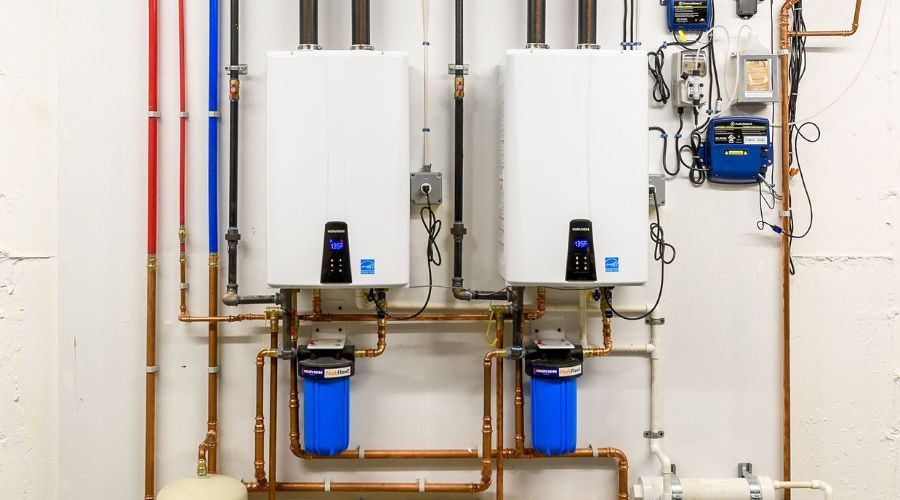
Can You Replace a Storage Water Heater With Tankless?
Yes, many properties can be converted from a conventional storage water heater to tankless, but it should be treated as an installation project rather than a simple appliance swap.
The existing gas line or electrical service may need to be evaluated. Venting can change. A condensing model may require condensate drainage. The mounting location and service clearances must work. Water shutoffs, isolation valves, filtration or scale-control strategy, and the route for hot and cold water all affect the installation.
The project also needs to account for hot-water demand. A correctly sized tankless system can provide continuous hot water within its rated flow capacity, but “continuous” does not mean unlimited flow. If the household uses more hot water at once than the unit can produce at the required temperature rise, outlet temperature or flow can suffer.
What Matters During a Gas Tankless Water Heater Installation?
Gas tankless systems involve fuel delivery, combustion, venting, electrical controls, water connections, and manufacturer-specific clearances. DOE notes that proper installation depends on fuel type, climate, local building-code requirements, and safety considerations and recommends qualified installation.
SoCalGas's current home energy and safety guide advises customers to keep natural-gas appliance vents intact and unobstructed and to use qualified professionals for appliance safety. If natural gas is suspected, do not continue troubleshooting the water heater. Leave the area and contact SoCalGas or emergency services from a safe location.
Do Not Ignore These Safety Signs
Natural-gas odor, hissing, visible vent damage, repeated combustion shutdowns, soot, unusual exhaust odors, or carbon-monoxide alarms require a safety-first response rather than continued appliance troubleshooting.
What Happens During Tankless Water Heater Service?
Review the Symptoms
The plumber notes error codes, temperature complaints, low-flow issues, shutdown behavior, maintenance history, and when the problem occurs.
Inspect the Installation
Water flow, filters, valves, gas or electrical supply, venting, visible scale, controls, connections, and model-specific components are evaluated.
Test the Actual Cause
Instead of replacing random parts, the technician narrows the problem to maintenance, flow, ignition, sensing, utility, control, venting, or component failure.
Review Repair or Replacement
The property owner can compare the repair path with replacement or resizing when the existing unit is no longer a good fit.
How Do You Maintain a Tankless Water Heater?
Maintenance should follow the manufacturer for the exact model. Typical service can include cleaning or replacing inlet filters, checking for leaks, inspecting venting and connections, and flushing or descaling the heat exchanger when mineral accumulation warrants it.
Santa Clarita's hard-water conditions make mineral scale an especially relevant maintenance topic. SCV Water explains that local groundwater naturally contains calcium and magnesium. Those minerals are not a health threat, but they can leave deposits. In a tankless heat exchanger, mineral accumulation can reduce water passage or heat transfer if it is allowed to build up.
Descaling
Manufacturer-approved flushing or descaling can remove mineral deposits from applicable heat exchangers. The schedule should reflect the model and local water conditions.
Filter Cleaning
Many units include an inlet filter or screen that can restrict flow when debris accumulates. Service should follow manufacturer instructions.
Installation Inspection
Check visible water leaks, vent condition, isolation valves, condensate handling where applicable, wiring, gas connections, and other serviceable installation components.
Tankless Water Heater Service for Santa Clarita Properties
Alliance United Plumber Santa Clarita can evaluate tankless water-heater problems and installation options for homes, rentals, businesses, and other properties throughout the Santa Clarita area. Call with the service address and ZIP code to confirm current availability.
This page is written specifically for Santa Clarita rather than reusing Los Angeles service-area copy. GEO relevance comes from the real service area, Santa Clarita Valley water conditions, and regional gas-safety context—not from repeating the city name in every sentence.
Santa Clarita Area
Service availability depends on technician location, access, and the tankless water-heater problem.
What Customers Say About Alliance United
The customer names and locations below are retained from the current Alliance United page. The feedback is summarized rather than presented as new Santa Clarita tankless-water-heater reviews.
Carlos described a serious pipe problem, a fast response, professional service, and a successful repair.
Carlos RodriguezLos Angeles, CAPatricia highlighted quick attention to a bathroom leak and appreciated the technician's careful work.
Patricia LopezTopanga, CAAlejandro praised punctual arrival, clear identification of the plumbing problem, and professional service.
Alejandro GarciaSan Fernando, CALaura described a clogged-drain call where the technician acted quickly and resolved the problem.
Laura MartinezGlendale, CATankless Water Heater Santa Clarita FAQs
Why does my tankless water heater go cold during a shower?
Possible causes include insufficient flow through the unit, mineral scale, a restricted inlet filter, ignition problems, sensor or control issues, plumbing crossover, or a unit that cannot support the combined hot-water demand at that moment.
Why does my tankless water heater show an error code?
Error codes are model-specific and can point toward ignition, combustion, venting, flow, temperature, scale, sensor, or control problems. The code is useful diagnostic information, but the appliance and installation still need to be checked before parts are replaced.
Does Santa Clarita hard water affect tankless water heaters?
SCV Water says many residents experience hard water caused by naturally occurring calcium and magnesium in the groundwater supply. Those minerals can form deposits, making scale and descaling relevant maintenance considerations for tankless heat exchangers.
How often should a tankless water heater be descaled?
There is no universal interval for every unit. The manufacturer, water hardness, usage, temperature settings, maintenance history, and any water-treatment equipment should guide the schedule.
Can I replace my regular water heater with a tankless unit?
Often yes, but the conversion may require evaluation of gas-line or electrical capacity, venting, mounting location, condensate drainage for applicable models, water connections, service clearances, and the property's hot-water demand.
How do I know what size tankless water heater I need?
Tankless sizing is based largely on required flow rate and temperature rise. The system should be able to support the hot-water fixtures likely to operate at the same time at the desired outlet temperature.
Is a tankless water heater more efficient than a storage water heater?
The Department of Energy explains that demand-type water heaters avoid standby energy losses associated with storage tanks. Actual savings depend on household hot-water use, fuel, equipment efficiency, installation, operating conditions, and utility costs.
Should I repair or replace an older tankless water heater?
Repair may make sense when the unit is properly sized and the failure is serviceable. Replacement becomes more reasonable when major components are compromised, failures are frequent, the system is badly undersized, or the installation needs substantial correction.
Do you provide tankless water heater service in Valencia, Saugus, Newhall, and Canyon Country?
This page targets Santa Clarita and nearby communities including Valencia, Saugus, Newhall, and Canyon Country. Call with the exact service address and ZIP code to confirm current availability.
Helpful Tankless Water Heater & Santa Clarita Resources
Need Tankless Water Heater Repair or Installation in Santa Clarita?
Call Alliance United Plumber Santa Clarita to describe the symptoms, review repair versus replacement, check sizing and installation conditions, and confirm current service availability. Whether the problem is an error code, temperature fluctuation, mineral scale, ignition trouble, low flow, or a planned conversion from tank to tankless, start with the actual system and hot-water demand.